Sleep Study Level 2

(Polysomnography Level 2)

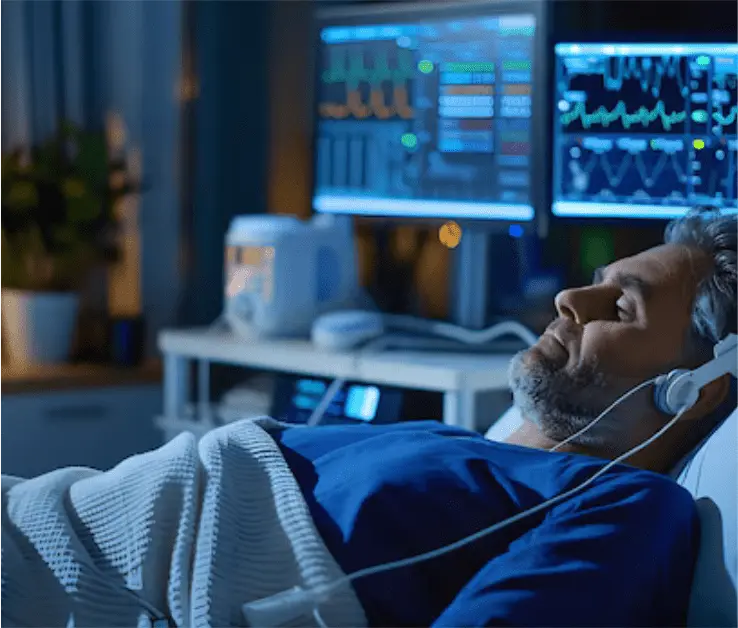
A sleep study (polysomnography) is a diagnostic test used to evaluate sleep patterns, disorders, and physiological functions during sleep. It is typically conducted in a sleep lab or at home, depending on the type and severity of the suspected sleep disorder. Below is a detailed breakdown:
Types of

Sleep Studies

In-Lab Polysomnography (Level 1)

Home Sleep Apnea Testing (HSAT) (Level 2, 3)

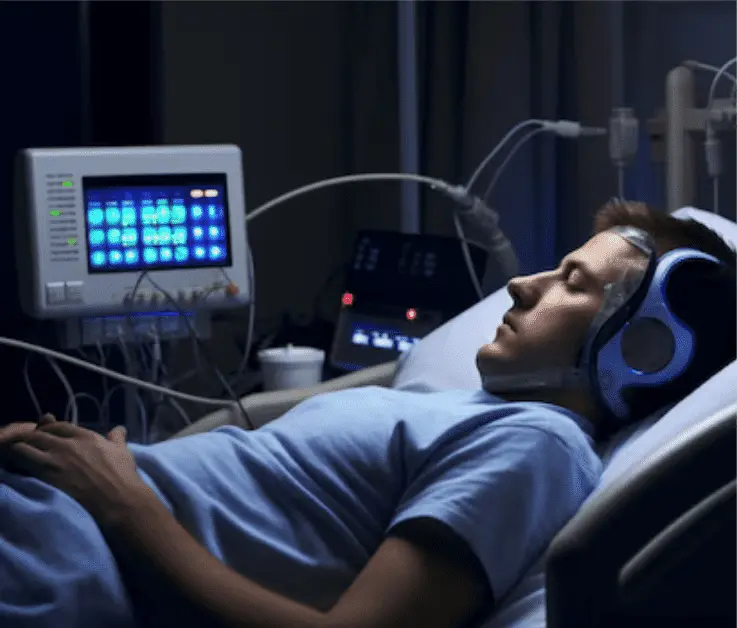
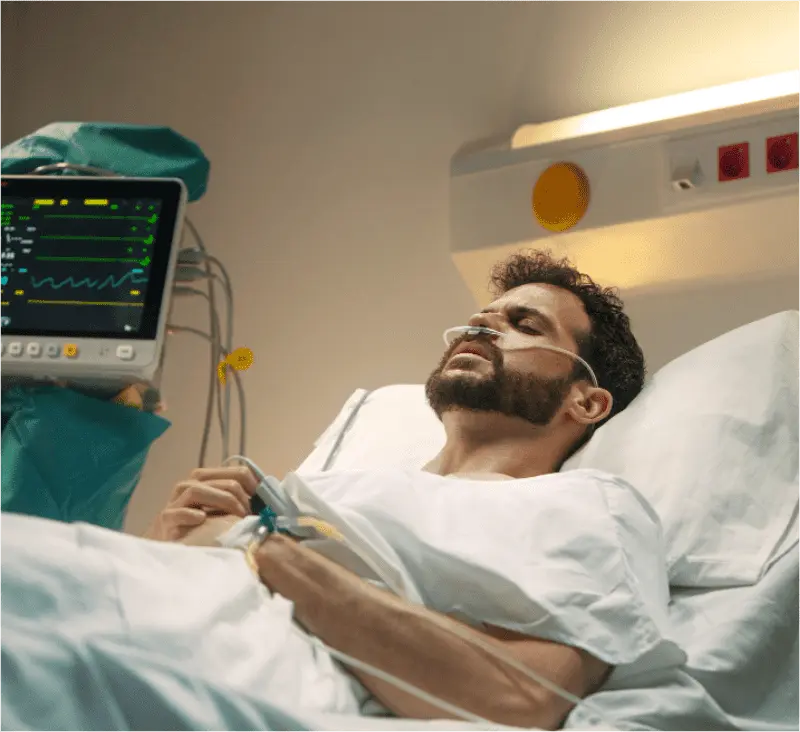
In-Lab Polysomnography (Level 1)

  • Gold standard for diagnosing sleep disorders.
  • Conducted in a sleep clinic or hospital.
  • Measures:
    • Brain waves (EEG)
    • Eye movements (EOG)
    • Muscle activity (EMG)
    • Heart rate (ECG)
    • Breathing patterns (nasal airflow, chest/abdominal effort)
    • Oxygen levels (pulse oximetry)
    • Limb movements
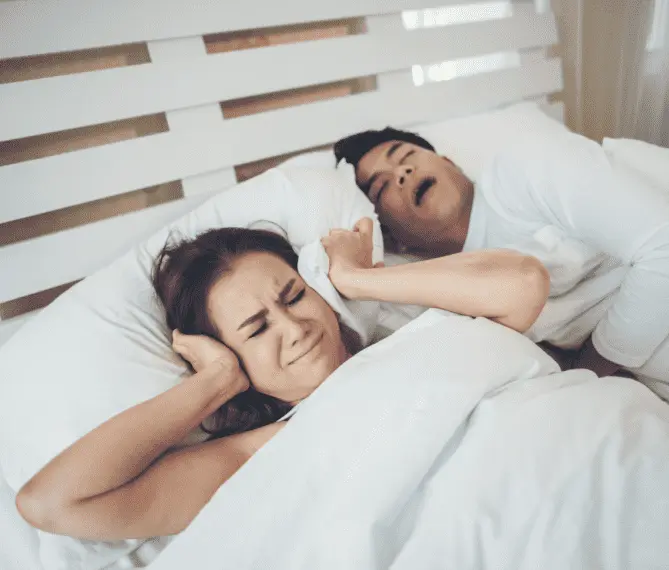
    • Snoring and body position
  • Used for: Diagnosing sleep apnea, narcolepsy, restless legs syndrome (RLS), parasomnias (e.g., sleepwalking), and insomnia.

Home Sleep Apnea Testing (HSAT) (Level 2, 3)

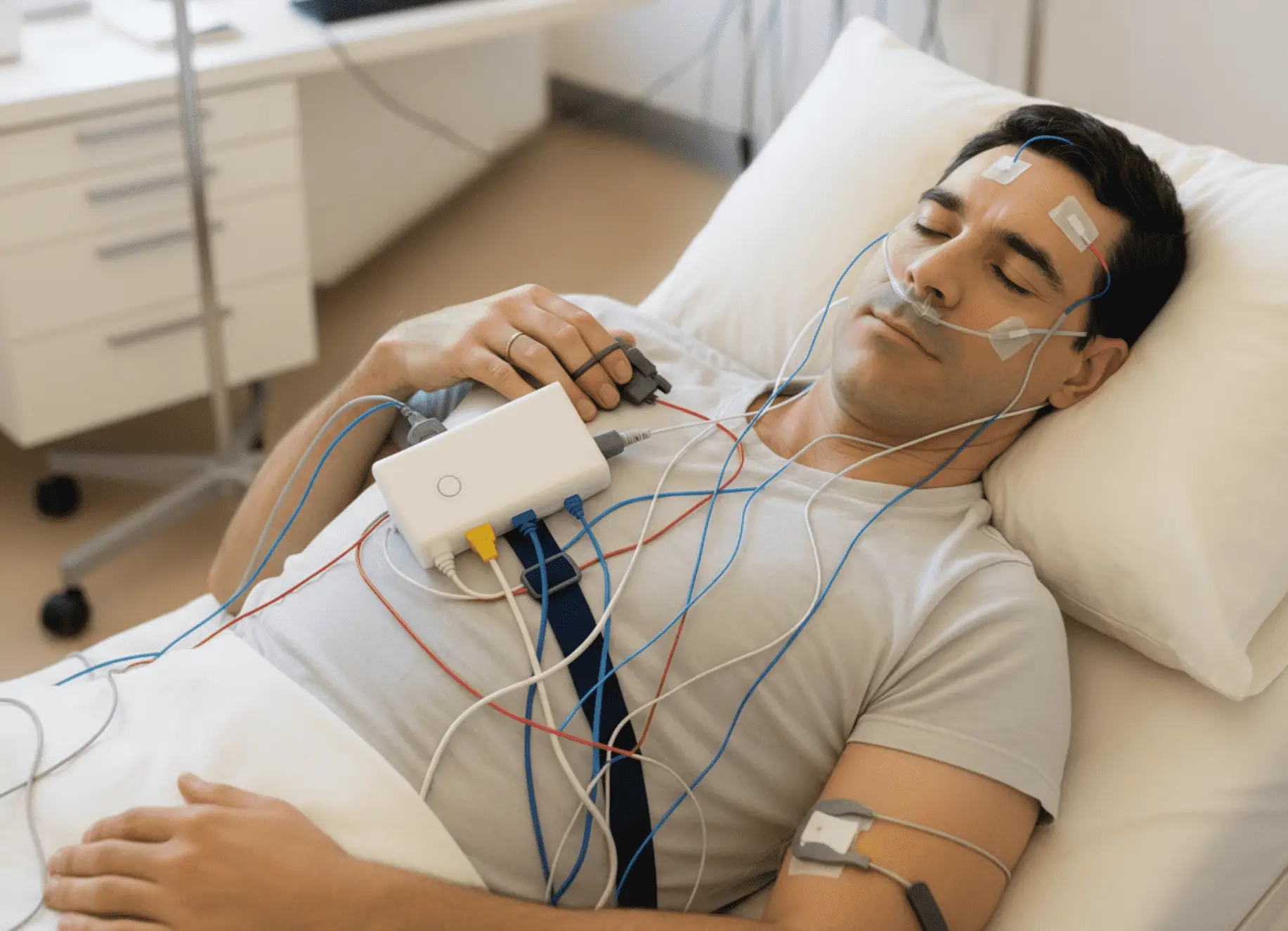
  • Portable devices used at home to primarily assess obstructive sleep apnea (OSA).
  • Levels:
    • Level 2: Measures 7+ parameters (similar to in-lab, but less comprehensive).
    • Level 3: Limited-channel devices (e.g., airflow, oxygen, effort, heart rate).
  • Advantages: Convenient, lower cost.

Why Are Sleep Studies Done?

Diagnose sleep apnea
(obstructive or central).

Evaluate insomnia or unexplained daytime sleepiness.

Detect parasomnias (e.g., night terrors, REM sleep behavior disorder).

Assess narcolepsy or hypersomnia.

Monitor treatment efficacy (e.g., CPAP for sleep apnea).

Procedure